In his address to the Kuala Lumpur Conference on a New, Just and Humane International Order, Jeremy Corbyn argues that two great awakenings have the promise to reshape our world: the Global South’s reassertion of national and popular sovereignty and the Global North’s democratic uprising against corporate power and imperial violence. He contends that the convergence of these movements — anchored in solidarity and human dignity — offers the foundation for a new international order for the many, not the few.
Introduction
Thank you, Prime Minister Anwar Ibrahim.
Thank you to our hosts here in Kuala Lumpur, and to all the movements, thinkers, and communities gathered for this important conference.
In your leadership, Prime Minister, we see the courage to imagine a new order — one led not by domination and war, but by the sovereignty of peoples and nations.
Our task today is to ask: How can we bring together two great emerging movements of our time — the awakening of the South, reclaiming sovereignty from empire, and the awakening in the North, reclaiming democracy from corporate power — to build a world for the many, not the few?
As Rabindranath Tagore, the great Indian polymath, who sadly didn’t live to see his country free from colonialism, once wrote,
“Where the mind is without fear and the head is held high… into that heaven of freedom, my Father, let my country awake.”
That is the awakening we see today — from Kuala Lumpur to Caracas, from Genoa to Gaza.
The crisis of the current world order
The world order that has governed our lives for decades is crumbling.
It was built on colonial power, sustained by economic domination and justified variously as a civilisational project.
A handful of nations — and within them, a handful of corporations — claim the right to dominate the lives of billions.
They control our resources, our labour, our news, even our imagination.
But that system is in deep crisis.
The financial crisis displayed its hubris.
The pandemic revealed its fragility.
The climate emergency exposes its lies.
And the genocide in Gaza makes plane its moral bankruptcy.
When the powerful speak of a “rules-based international order” — they mean rules for others, and impunity for themselves.
Palestine: the moral fault line of our age
There is no clearer test of our moral and political conscience than Palestine.
For more than two years, the world has watched Israel wage a war of annihilation against the people of Gaza.
Tens of thousands, probably several hundred of thousands killed.
Entire families erased.
Every hospital bombed.
Children buried beneath the rubble of schools and homes.
Last week, we welcomed news of a ceasefire, although it remains to be seen whether Israel will abide by its terms. Yes, we rejoice in the sight of children celebrating in Gaza. But we also weep for the children whose laughter is forever buried under the rubble.
A ceasefire is respite. But it is not long-term peace. We must continue to campaign against ethnic cleansing. Against apartheid. Against colonial rule.
It is not for Donald Trump, Benjamin Netanyahu or Tony Blair to determine the future of Gaza. That is up to the Palestinian people.
In the coming months and years, we will learn of the true scale of death and destruction. And we will learn more about the complicity of governments across the globe.
We have not just been witnessing a grave, a grotesque crime against the Palestinian people — we have been witnessing a crime against humanity itself. Genocide launches an assault on our common humanity.
And yet the governments that claim to defend human rights — Britain, the United States, the European Union — have been arming, funding and justifying this atrocity.
The silence of power has been deafening.
But the voice of the people has never been louder.
Millions have marched in the streets.
Students have occupied their universities.
Workers have refused to transport weapons.
Journalists, artists and faith leaders have risked their careers to speak the truth.
And countries of the Global South have stood up where the old powers have been at best complicit and at worst full blown participants in the wanton slaughter.
South Africa, Malaysia, Colombia and others have spoken up for our common humanity — at great risk to themselves.
The creation of The Hague Group marks a historic step — a coalition of nations defending international law when the North has abandoned it.
Let me say clearly: the people of Gaza are not alone.
Their struggle for freedom is part of a wider struggle — for a world where no people live under occupation, no child is denied dignity, and no land is treated as expendable.
The awakening of the South — reclaiming sovereignty
What we are seeing today is an awakening — or rather, a reawakening — of the South.
Because the struggle for sovereignty is not new.
It was the dream that drove the national liberation movements of the twentieth century — when peoples across Asia, Africa, and Latin America rose to reclaim their land, their labour and their dignity.
From India’s independence to Indonesia’s revolution, from the Bandung Conference here in Asia to the liberation struggles of Africa, the nations of the South once stood together to say: we will govern ourselves.
But that dream was betrayed — not by the courage of the people, but by the structures of global power that replaced the colonial flag with economic chains.
Debt, dependency, and unequal trade kept too many nations in a new kind of subjugation.
As Frantz Fanon once wrote, “Each generation must, out of relative obscurity, discover its mission, fulfil it, or betray it.”
Now, a new generation has rediscovered that mission — the mission of true sovereignty, of freedom in every sense of the word.
Governments, movements, and communities are asserting once more their right to self-determination — to control their resources, to build industries that serve their people, to protect their land and culture.
Across the Global South, we hear the same message: Enough.
Enough of debt imposed by foreign banks.
Enough of economic dictates from Washington and Brussels
Enough of sovereignty as a privilege reserved for the few.
This awakening is not only about states; it is about people.
True sovereignty must mean people’s sovereignty — over resources, work, food, water, and knowledge.
Prime Minister Anwar’s call for a new order from the South speaks directly to this reawakening.
It is not nostalgia for the past — it is a renewal of its promise: to build a world where every nation and every person can live in dignity, free from domination.
The awakening of the North: reclaiming democracy
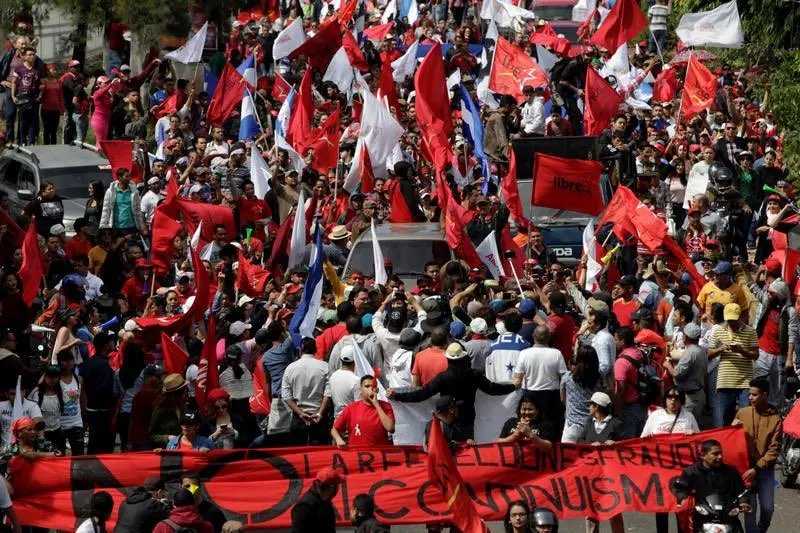
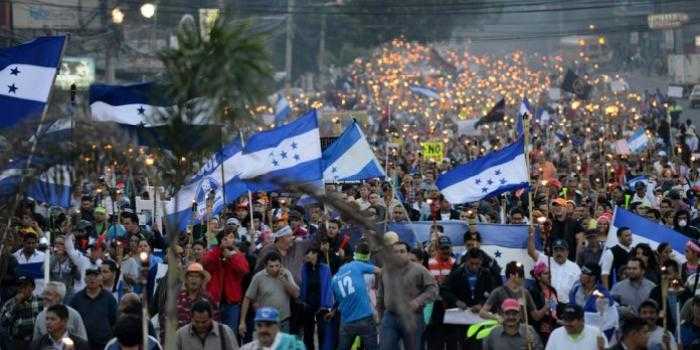
At the same time, something extraordinary is happening in the North.
The people are rising against a system that does not represent them.
In Italy, workers have gone on general strike for Palestine — refusing to be complicit in genocide.
In Britain, hundreds of thousands have marched through London for peace, week after week, despite vilification from their own government — and now 1500 people arrested under terrorism charges, including many pensioners and disabled people, for holding signs with seven words on them saying “I oppose genocide I support Palestine Action.”
Across the United States and Europe, students have occupied their campuses, declaring: “Not in our name.”
These are not isolated acts.
They are part of a deeper awakening — an understanding that our societies are ruled not by democracy, but by wealth.
By corporations that profit from war, pollution, and exploitation — while the majority struggle to pay their bills and keep their homes warm.
This, too, is an awakening: a popular awakening for democracy, justice, and peace.
And it can speak in the same moral language as the awakening of the South: the language of human solidarity.
The new internationalism — sovereignty meets solidarity
When sovereignty in the South meets solidarity in the North, we begin to build a new kind of internationalism.
Not the old imperial globalisation, but a people’s internationalism, “a diplomacy of peoples”, in the words of the political declaration of the Progressive International, on whose Council I sit.
I am proud to work with the Progressive International, which exists to build that bridge — between workers and governments, social movements and parliaments, farmers and feminists, artists and academics — across every border.
Together with the The Hague Group, we have defended the principles of international law — not as a weapon of the strong, but as the shield of the weak.
Internationalism is not a slogan.
It is a practice.
It means standing together, sharing resources, learning from one another, and refusing to be divided by race, religion, or geography.
As I have said often: our greatest strength is our unity, and our greatest enemy is despair.
Closing: hope, moral leadership, and the world to come
This is a historic moment.
As a great Italian once said, the old order is breaking down — but the new has not yet been born.
The question is who will build it: the billionaires and generals, or the people and movements who believe in peace and justice.
The world we fight for is simple:
Where every child can live free from fear.
Where nations cooperate, not compete.
Where the earth itself is cared for — its forests, rivers and ecosystems protected for generations to come.
Where wealth serves humanity, not the other way around.
Where the many, not the few, decide our common future.
And so, let us join hands across continents — the awakening of the South and the awakening in the North — to build a world of sovereignty and solidarity.
Malaysia has shown the way: moral courage in the face of empire, and faith in the power of humanity.
Let us end as we began — with the words of Tagore, spoken more than a century ago but still alive in our hearts today:
“Where the mind is without fear and the head is held high… Into that heaven of freedom, my Father, let my country awake.”
Let our people awake.
Let our countries awake.
Let our world awake.
A world for the many — not the few.