Briefing
PI Briefing | No. 36 | The World Converges on Gaza
From New York to the Mediterranean, governments and movements join forces to halt Israel’s genocide.
When Israeli Prime Minister Benjamin Netanyahu approached the UN General Assembly lectern on 26 September, dozens of delegates walked out in protest, emptying entire blocks of seats. This exodus was not only a rebuke. It reflected a turning point, as many of those same states assembled just blocks away to convene the largest meeting yet of The Hague Group.
Even with a reduced audience, Netanyahu’s words were defiant. He derided recognition of a Palestinian state as a “mark of shame” and vowed to “finish the job” in Gaza — the very campaign the UN Commission of Inquiry had determined, just one week earlier, to constitute genocide. In an act characteristic of the sadistic terror inflicted on the people of Gaza, Israeli regime media reported that Netanyahu’s speech was broadcast throughout the besieged strip — directly into the hacked phones of its starving residents.
But meaningful opposition to the genocide is mounting. As Netanyahu gave his hateful speech, The Hague Group convened foreign ministers and envoys from 35 states for a high-level meeting: to coordinate legal, economic, and diplomatic actions against Israel.
States presented concrete proposals to consolidate the growing wave of national policy responses into “a coordinated global strategy,” according to the co-chairs. “Such coordination strengthens the global response to Israel’s ongoing crimes, setting a model for all states to immediately fulfil their legal obligations, and creating robust mechanisms for accountability at the national, regional, and international levels.”
The proposed measures included: halting military and dual-use exports; refusing Israeli weapons shipments at ports; preventing vessels under national flags from carrying arms to Israel; reviewing and cancelling public contracts with Israeli firms; pursuing justice through universal jurisdiction; suspending military procurement; divesting public institutions from complicit companies; and instituting energy embargoes.
In their closing statement, Foreign Ministers Rosa Villavicencio (Colombia) and Ronald Lamola (South Africa) were unequivocal: “The choice before every government is clear: complicity or compliance. History will judge us not by the speeches we delivered, but by the actions we took.”
The Hague Group’s ministerial meeting was followed by a public gathering at the New York Society for Ethical Culture, where a packed auditorium heard from Rula Jebreal, Noura Erakat, Nayda Tannous and Colombian President Gustavo Petro.
"Colombia has now employed an energy embargo against the state of Israel, stopping coal exports,” said Tannous, who represented PI member the Palestinian Youth Movement. “It shows that it is possible to not just speak words in the UN chamber but take action to stop a genocide."
President Petro was clear: “It’s useless to recognise a state if bombs fall upon it.” He warned, “If Gaza falls, humanity falls” — echoing his message of solidarity with the Global Sumud Flotilla, now sailing toward Gaza with its lifeline of humanitarian aid.
Together, the Flotilla and the Hague Group highlight a growing convergence of pressure — from states and from grassroots movements — to cut the material lifelines of Israel’s war machine.
As Netanyahu left the Assembly under a cloud of diplomatic rejection, the Hague Group emerged with something larger: the outlines of a new global effort to rescue international law and international institutions from those seeking to dismantle them for good.
This weekend, South Africa’s shack dwellers’ movement and Progressive International member Abahlali baseMjondolo (AbM) began a week of celebrating 20 years of struggle. AbM is hosting a series of events around the anniversary, including a mass rally in Durban on Saturday, 4 October. Watch the AbM choir sing The Internationale at a dinner for members and friends of the movement. The Progressive International is working together with AbM to study the theories and strategies underpinning their movement — look out for future Briefings for updates about this research.
The Global Sumud Flotilla set off from Cyprus on the final leg of its journey towards Gaza. With over 40 ships and more than 500 participants, the Flotilla represents the largest grassroots humanitarian effort for Gaza in history. The journey has not been without setbacks. In recent weeks, drone strikes damaged ships docked in Tunis, and three ships later suffered “catastrophic engine failures” — suspected sabotage. As the Flotilla approaches Gaza, it faces imminent interception by Israeli Occupation Forces. We will keep you posted on the journey as and when we receive updates.
On 21 September 2025, some 100,000 protesters gathered in Manila's Luneta Park before marching toward Mendiola Bridge — a historically contested site outside the presidential palace — to demonstrate against systemic corruption under the US-backed regime of President Marcos Jr. The protests responded in part to a 1.2 trillion peso flood-control scandal, where a significant part of the funds meant for flood control defences vanished. “These aren’t just scandals—they’re symptoms of a broken system,” said Sarah Jane Raymundo, a People’s Academy lecturer and National Executive Member of BAYAN, one of the movements leading the struggle. “What we’re seeing now with the flood projects is a repeat of the same old story. And the people are right to be furious.”
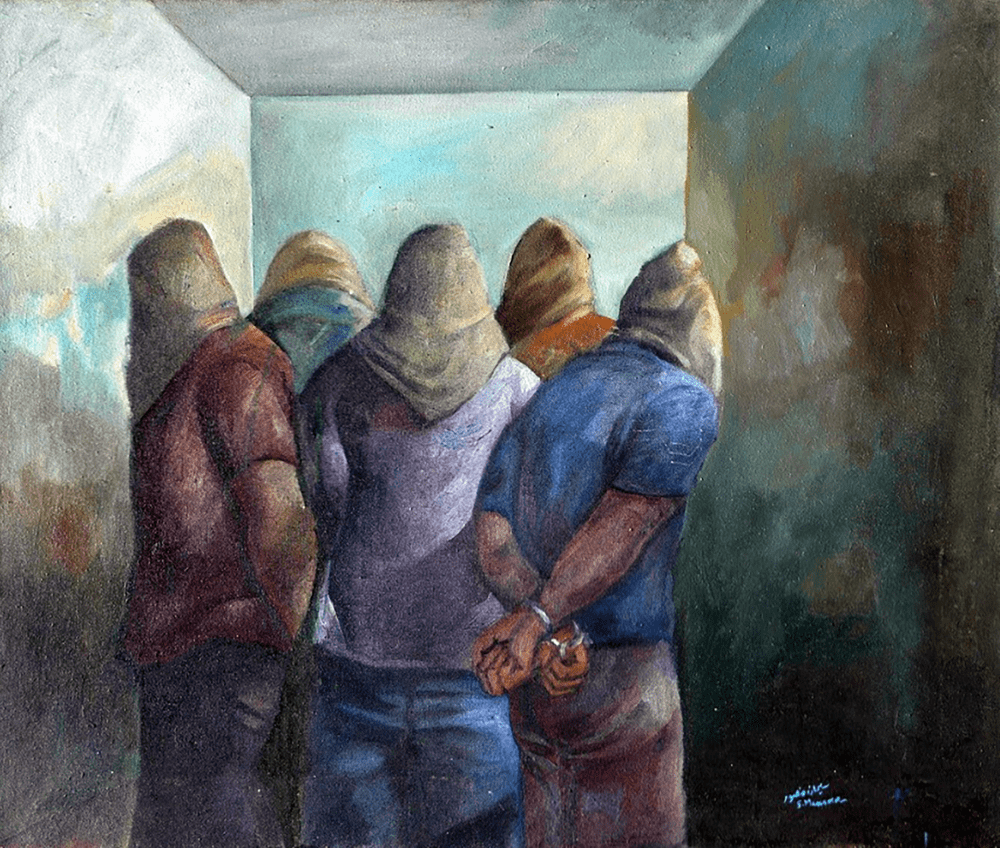
Ashraf Sahweil is a painter from the Shati refugee camp in Gaza. He works as a Director for Gaza Center for Culture and Arts — and as a journalist focusing on arts and culture. Sahweil lives and works in Gaza.