The US military intervention against Venezuela, culminating in the abduction of Nicolás Maduro on 3 January 2026, has been prepared for a long time. In an article published in Carta Capital in February 2019 entitled ‘Donald Trump, the end of globalism, and the crisis in Venezuela’, I argued that the then president spoke with unusual frankness about the real objectives of US imperialism: not the defense of democracy or human rights, not even the (selective) respect for international treaties shaped by liberal ideology, but control over resources of strategic and economic value. Even then, Trump openly criticized his predecessors for not having ‘taken the oil’ from Venezuela or Iraq, or the rare earths from Afghanistan, making clear a predatory logic that traditional liberal discourse had long concealed.
In January 2013, Trump tweeted, ‘I still cannot believe we left Iraq without the oil.’ In a debate with Hillary Clinton in September 2016, he proposed a return to the 19th century: ‘The custom was that the spoils belonged to the victor. Now there is no longer a victor… But I always said: take the oil.’
As president, Trump pressed the Iraqi president twice to cede more oil to offset war costs. Former National Security Advisor H.R. McMaster reportedly rebuked him the second time: ‘It is bad for America’s reputation, it will scare our allies… and it makes us look like criminals and thieves.’ In January 2019, Vice President Mike Pence stated that Trump ‘is not a fan’ of foreign interventions, except ‘in this hemisphere’ (the so-called ‘backyard’).
It foreshadowed the Donroe Doctrine. Also in January 2019, then National Security Advisor John Bolton stated that ‘we’re in conversation with the major American (oil) companies… Venezuela is one of the three countries that I called the Troika of Tyranny (along with Nicaragua and Cuba). It would make a big difference to the United States economically if we could get American oil corporations to truly produce and invest in Venezuela’s oil sector.’
In April 2025, at the meeting ‘IV Dilemmas of Humanity: Perspectives for Social Transformation’, organized by Tricontinental: Institute for Social Research, the Landless Workers’ Movement (MST), and the International Peoples’ Assembly (IPA) in São Paulo, I argued that Trump would choose Venezuela as his first military target in the so-called Western Hemisphere, in what would be the first direct military intervention in South America in history. The argument was simple: attacks on Canada or Greenland would be far more risky and far harder to defend diplomatically; Venezuela, by contrast, offered justifications that the MAGA movement’s political base would accept (the alleged threats of Venezuelan immigration and Venezuelan drug trafficking), while offering vast reserves of oil and critical minerals for the technological rivalry with China.
The National Security Strategy (NSS), published by the Trump administration on 4 December 2025, formalized this hemispheric strategy, centered on ‘strengthening critical supply chains… reducing dependencies and increasing US economic resilience… while making it difficult for non-hemispheric competitors to increase their influence in the region’. This document enshrines what analysts have called the ‘Trump Corollary’ to the Monroe Doctrine or, more sarcastically, the ‘Donroe Doctrine’: an explicitly transactional and coercive version of Pan-Americanism that subordinates Latin America to the United States’ imperatives of security and capital accumulation.
In practice, the military intervention in Venezuela is not a defense of democracy or a humanitarian intervention: it is the official end of the ‘globalism’ that tied US military power to the liberal ideology of national sovereignty in the United Nations Charter, as I warned was Trump’s objective as early as 2019. It is the end of the ‘American century’ imagined for the world by Woodrow Wilson during World War I and rehearsed by Franklin Delano Roosevelt in World War II. It represents the securitization of strategic resources in the context of the Sino-American rivalry and, eventually, an effort to restructure global production chains along geopolitical lines. This is a dangerous precedent that puts sovereignty at risk across the region, starting with the new ‘Troika’, the new dominoes to be toppled by US imperial power: Cuba, Nicaragua, and Colombia.
2. The Geoeconomic Logic of the Venezuelan Choice
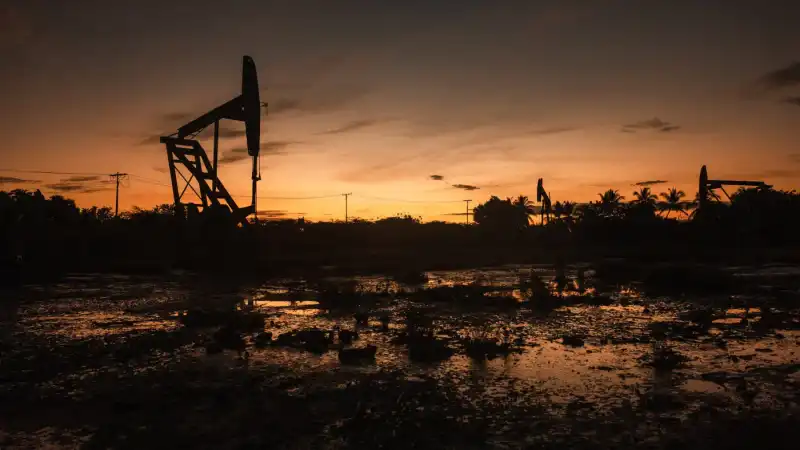
Venezuela was chosen as the first military target not by chance, but because it offers an ideal convergence of geoeconomic opportunity and political viability. The country holds the world’s largest proven oil reserves and vast deposits of critical minerals essential to clean energy and defense technologies. Trump has repeatedly stressed the importance of these resources, including in an interview in which he said that, after Maduro’s abduction, he would ‘govern Venezuela’.
This frankness about the material goals of imperialism connects directly to the broader strategy of friendshoring or nearshoring set out in the 2025 National Security Strategy. The document is not limited to proposing diversification away from Chinese supply chains; at least rhetorically, it seeks the systematic restructuring of global value networks based on geopolitical criteria. Thus, the dual objective toward Latin America is explicit: first, to secure US control over critical mineral resources (lithium, copper, rare earths) and strategic infrastructure (ports, telecommunications networks, energy systems); second, to integrate Latin American economies into manufacturing chains fully insulated from Chinese participation or influence.
The offer made by María Corina Machado in an interview with Donald Trump Jr. illustrates the mineral question perfectly: in exchange for support for regime change that would bring her group to power, she offered US$ 1.7 trillion in Venezuelan assets to US corporations. The proposed arrangement is not substantively different from the oil concessions that characterized classical imperialism in the late 19th and early 20th centuries and that would lead to two World Wars.
On the question of supply chains, the plan goes beyond traditional concerns about resource extraction and extends to the reorganization of regional production systems. In labor-intensive, energy-intensive, and low-input-cost sectors where reindustrialization through onshoring in the United States is not viable, Washington will propose building manufacturing links in Latin America in strategically sensitive chains (semiconductors, batteries, pharmaceutical products, advanced materials) but strictly within governance structures that exclude Chinese investment, technology, or access to Chinese markets. This is an attempt to compartmentalize production networks geopolitically, creating parallel supply chains organized around strategic loyalty. Only in this light can one understand the decision by the Mexican government to impose import tariffs on 1 January 2026 on a range of products from China, Brazil, and other countries that do not have a trade agreement with Mexico.
The symbolic dimension of the choice to attack Venezuela also deserves attention. The MAGA narrative requires enemies that threaten the ‘traditional American way of life’. Venezuela can fill this role: it can be presented simultaneously as a source of unwanted immigration and of drug trafficking, two central obsessions of Trump’s political base. Unlike Canada or Greenland, whose invasion would be difficult to justify domestically and would trigger a crisis in the Western alliance, an attack on Venezuela activates deep-rooted prejudices and offers convenient scapegoats for internal problems in the United States.
3. Dismantling the Official Justifications
The three narratives used to legitimize the military intervention (defense of democracy, the fight against drug trafficking, and humanitarian intervention) collapse under minimal scrutiny, revealing themselves as pretexts for an operation driven by interests of economic domination backed by political and military power, and aimed at reinforcing those interests over the medium term.
The democratic argument is especially untenable coming from Trump. Without even mentioning 6 January 2021, Trump himself publicly mocked, on multiple occasions, the use of ‘defense of democracy’ as a justification for imperial interventions, denouncing it as liberal hypocrisy. In December 2015, Trump defended Vladimir Putin by stating, ‘our country also does a lot of killing… There is a lot of stupidity in the world right now, a lot of killing, a lot of stupidity’. In February 2017, already president, Trump responded to Bill O’Reilly’s criticism that ‘he (Putin) is a killer’ by stating that ‘there are many killers. Do you think our country is so innocent?’ His record confirms the cynicism of the democratic rhetoric: Trump maintains close alliances with friendly dictatorships, from the absolutist monarchies of the Persian Gulf to Saudi Arabia, and he also offered enthusiastic support to the coup politics of Jair Bolsonaro and his circle in Brazil. The problem is never the absence of democracy, but the lack of alignment with Washington.
The anti-drug argument is equally fraudulent. A few days before the invasion of Venezuela, Trump granted a presidential pardon to Juan Orlando Hernández, former president of Honduras, who had been tried and convicted in the United States for conspiracy to traffic drugs on an industrial scale. Drug trafficking serves as a convenient narrative when it is necessary to demonize adversaries; it becomes irrelevant when the defendant is a strategic ally. The selectivity could not be more obvious.
The humanitarian justification is perhaps the most obscene of the three. An administration that offers unconditional military, diplomatic, and political support to the Israeli genocide in Gaza (where more than 60,000 Palestinian civilians, including more than 18,000 children, have been killed in a few months) has no moral credibility to claim humanitarian concern. Moreover, the United States’ own military actions against Venezuela (bombings that hit civilian infrastructure, and a naval blockade that prevented the importation of food and medicine for many years) dramatically worsened the suffering of the Venezuelan population that those actions supposedly aimed to relieve.
4. The Military Operation and Its Regional Repercussions
The sequence of events that led to Maduro’s abduction followed a predictable script of coercive escalation. After months of intensifying unilateral sanctions and increasingly explicit threats, the Trump administration ordered a naval blockade. He may not know it, but it was the naval blockade and the military intervention by Great Britain, Germany, and Italy in Venezuela in 1902 that led to the Roosevelt Corollary to the Monroe Doctrine, as I sought to show in a long academic article analyzing US imperialism over Latin America between 1898 and 1933. Like Trump, Theodore Roosevelt claimed for the United States the exclusive right to police the Western Hemisphere, publicly announcing his intention to expel other military and financial empires from Central America and the Caribbean. Trump also echoed the intervention pattern of early 20th-century ‘Dollar Diplomacy’ by coordinating special forces and the Central Intelligence Agency (CIA) with sectors of the internal opposition and with military deserters, culminating in the illegal abduction of the Venezuelan president on 3 January 2026.
Trump’s subsequent statements were frank: the United States would ‘administer the country’ and use oil revenues to ‘pay for the military operation and rebuild Venezuela as it should be’. There is no doubt about the objectives: direct control over strategic resources and the reorganization of the Venezuelan state according to imperial interests.
The regional repercussions of this action are profound and dangerous. Cuba, Nicaragua, and Colombia are the most likely next targets. Trump has already threatened them, and the Venezuelan precedent shows that such threats are not mere rhetoric. The Cuban communist regime, isolated after decades of blockade and recently weakened by severe energy crises, may have its days numbered. And Gustavo Petro may pay for speaking hard truths in New York and for representing an important piece in the domino line of Latin American left forces that Trump wants to knock down.
Mexico, Brazil, and even Western powers such as Denmark (because of Greenland) and Canada are on heightened alert. Trump’s threats against Greenland can no longer be dismissed as empty provocations.
Of course, Latin America does not respond uniformly to imperial coercion. Javier Milei’s Argentina offers an instructive counterexample: total ideological and strategic alignment with Washington was rewarded with a US$ 40 billion bailout package. This pattern of differentiated rewards and punishments confirms the explicitly transactional nature of the new hemispheric strategy: countries that accept subordination receive financial support; those that resist face growing coercion.
However, Ecuadorian resistance to foreign military bases, confirmed in a popular referendum in November 2025, shows that imposing Washington’s will faces obstacles even in relatively small countries. The invasion of Venezuela, however, dramatically raises the potential costs of resistance, establishing that the United States is willing to use direct military force when it considers its interests sufficiently threatened.
5. Brazil, China, and the Limits of Coercive Unilateralism
The Trumpist strategy of hemispheric subordination through tariff blackmail and the threat of military force faces significant structural limits, however. The Brazilian case illustrates these contradictions particularly clearly.
Europe, Japan, and South Korea quickly yielded to Trump’s trade demands due to their military dependence on the United States, that is, they were forced to ‘pay tribute to maintain the American empire’. Brazil, by contrast, maintained relatively successful resistance. This resilience comes from specific structural advantages: China has consolidated its position as Brazil’s main trading partner for more than a decade, absorbing a growing share of commodity exports; as a result, Brazil accumulated substantial international reserves that provide room to maneuver in currency crises; Brazilian diplomacy cultivated alternative relationships through BRICS (Brazil, Russia, India, China, and South Africa) and other multilateral platforms in the Global South.
Lula’s campaign for de-dollarization, intensified after his visit to China in April 2023, represents a direct challenge to the fundamental instrument of US power: control over the international monetary system. Proposals for bilateral settlement of trade and foreign exchange transactions in national currencies, discussions about a common BRICS currency, and the diversification of international reserves move business away from New York and gradually erode Washington’s ability to use financial sanctions as a geopolitical weapon.
Brazil’s relative autonomy clearly irritates Washington. Trump’s advisers publicly revealed that the United States is ‘very concerned’ about BRICS and de-dollarization, identifying Brazil as a particular problem. The attempt to force Brazil into alignment through punitive tariffs, however, ran into a simple constraint: the US market, although important, is no longer indispensable to the Brazilian economy in the way it was in earlier decades. Access to Wall Street is still indispensable, but blocking Brazilian access as a pressure tactic would accelerate what Trump wants to avoid: it would push Brazil out of the dollar world and toward BRICS.
The most fundamental limits of the ‘Donroe Doctrine’, however, go beyond any specific country. Prolonged military occupations are prohibitively costly, as Iraq and Afghanistan demonstrated. Opinion polls in the United States indicated that 55 percent of the population opposed the invasion of Venezuela, suggesting that further military adventures will face growing domestic resistance, especially if they produce significant US casualties or high fiscal costs.
More importantly, the United States is unable to present development proposals that rival China’s. While Washington’s strategy is based on conditioning access to the consumer market on political submission and using unilateral sanctions as a punitive tool, Beijing offers concrete infrastructure projects, patient long-term credit, technology sharing, and expanding markets, all without onerous political demands. This asymmetry in development offers creates a structural Chinese advantage that punitive tariffs and military threats cannot fully neutralize.
The risk of geopolitical blowback should not be underestimated either. Each US coercive action reinforces China’s narrative that Washington threatens Global South sovereignty, pushing countries to seek protection through closer alignment with Beijing. The invasion of Venezuela provides dramatic evidence for this argument, potentially accelerating the formation of blocs and alliances with China that Trump’s strategy claims to want to prevent.
6. The Die Is Cast: The Dangerous Precedent and the Need for Collective Resistance
The US military intervention in Venezuela and the abduction of Nicolás Maduro constitute a flagrant violation of international law and of the United Nations Charter. Regardless of any assessment of the Venezuelan government, the principle of unilateral military non-intervention is a fundamental civilizational achievement prepared at least since 1648 (Westphalia), and it cannot be discarded without catastrophic consequences for the international order.
The precedent established is extremely serious. If the United States can invade a sovereign country, depose its government, and take direct control of its natural resources on the basis of such transparently fraudulent justifications, no country is safe unless it has deterrent armed forces or strong military alliances. The normalization of unilateral military interventions destroys any pretense of a rules-based international system. The emperor has no clothes. Therefore, perhaps the military escalation reveals more weakness than strength. A hegemon confident in its economic, technological, and cultural primacy does not need to resort to military invasions to secure access to resources or markets. The United States’ willingness to use direct force reflects the erosion of more subtle forms of domination.
The abduction of Maduro weakens, but does not eliminate, Chavismo’s dominance in Venezuela. Nor does it resolve the structural contradictions of the United States’ hegemonic decline. The United States cannot offer an attractive development model that can effectively compete with the Chinese alternative; it does not have the fiscal capacity to finance a hemispheric Marshall Plan; it cannot reverse decades of domestic deindustrialization through punitive tariffs imposed on allies. The imposition of direct military control over Venezuela, if it is possible, may guarantee access to Venezuelan oil, but it does not restore the centrality of the United States in global production chains.
Alternatives to subordination exist, but they require political coordination and strategic courage from governments in the Global South. Strengthening regional platforms such as the Community of Latin American and Caribbean States (CELAC), the Union of South American Nations (UNASUR), and BRICS offers institutional space for collective resistance. Deeper South-South economic integration reduces vulnerability to US economic coercion. Diversifying international reserves and developing alternative payment systems undermine the power of financial sanctions.
The fundamental lesson of the invasion of Venezuela is that isolated sovereignty is vulnerable; only collective coordination can counterbalance imperial power. The challenge for progressive governments in Latin America and the Global South is to turn rhetorical indignation into effective cooperation. The precedent has been set. What is at stake is decisively historic: the next moves will determine whether the 21st century is marked by the resurgence of predatory military imperialism or by the consolidation of a genuinely multipolar international order.