Briefing
PI Briefing | No. 12 | Hands that hold the world
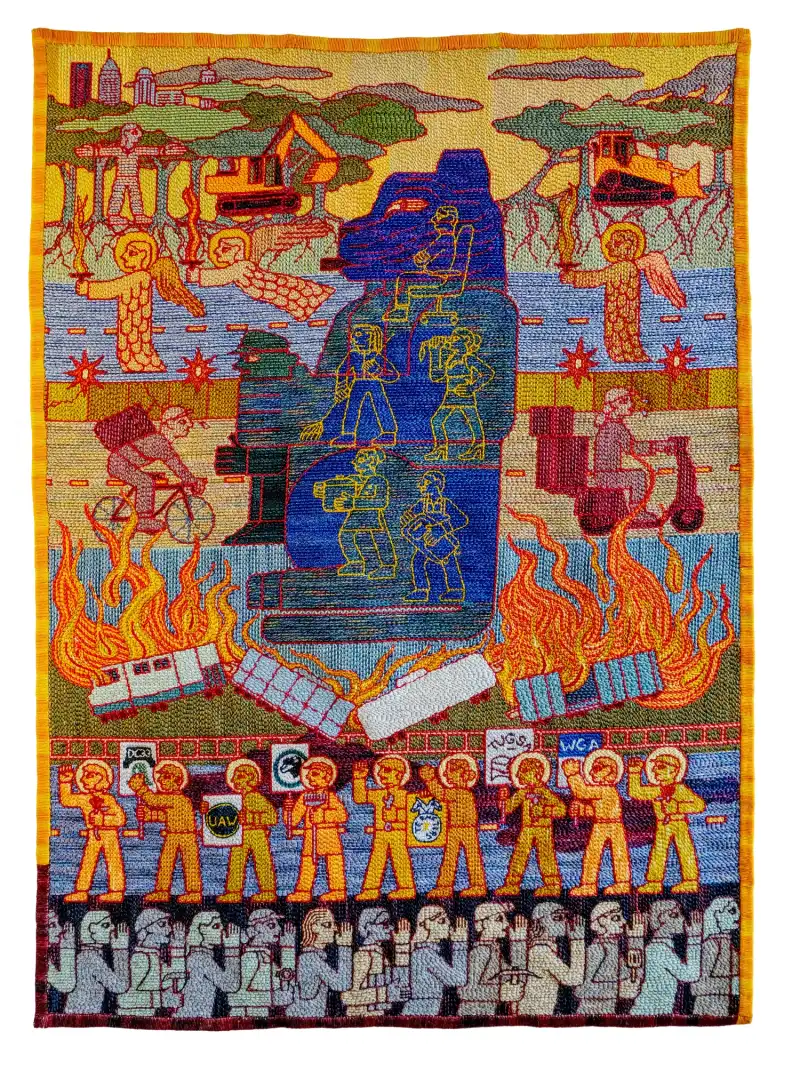
This May Day, from Havana to Hyderabad, Brasília to Buenos Aires, workers are fighting for land, time, dignity and sovereignty.
In a corridor of a Cuban hospital, Anne-Sophie Sarazin begins to cry.
She is a French hospital director, part of the Primero de Mayo Brigade that has followed the Nuestra América Convoy to Cuba. Around her are the signs of a country forced to improvise under siege: scarce medicines, unstable electricity supply, the daily labour of keeping a hospital running when the world’s most powerful state has spent more than six decades trying to choke its economy.
But what breaks her is not only the hardship.
“Here I see dignity,” she says, her voice catching. “I see care for everything and it’s magical.”
There, in a Cuban hospital corridor, the meaning of May Day comes into view.
In Cuba, labour is carried out under blockade. The worker’s day is stretched or cut short by an artificial scarcity imposed from abroad. Every act of care demands another act of invention.
The blockade attacks the labour and resources of an entire people. It tries to make ordinary life impossible, and then blames the people for struggling to live.
Cuba makes visible what the world economy is designed to conceal: domination begins with control over labour, land, resources and the right of a people to develop on its own terms. Imperialism keeps Southern land, labour and resources cheap for Northern wealth: land for exporters, mines for multinationals, ports for creditors, factories for buyers, platforms for venture capital, and states under the command of sanctions, debt, trade rules and military force.
Against that order, the struggle of labour celebrated today is also the struggle for sovereignty. A people cannot be free when its labour is cheapened, its land enclosed, its industries subordinated, its unions broken, its public goods privatised, and its national choices punished from abroad.
Across the world, that same struggle takes different forms.
In India, app-based workers are confronting the algorithmic command of the platforms. The companies sell speed to consumers and flexibility to investors. Workers and their families absorb the costs. The foreman is in the app, the factory gate is scattered across the city, and the working day is broken into tasks measured in seconds.
And still, workers organise.
They log off together. They strike. They form unions. They make themselves visible in an economy that depends on keeping them isolated. In Rajasthan, Karnataka, Telangana and beyond, their organising helped force a new legal settlement: registration, welfare boards, social security funds, grievance mechanisms, and levies on the platforms that have long shifted risk onto the riders and drivers who make their profits possible.
These are partial victories, but they show that the algorithm is not beyond politics. The app can be forced into law. The invisible worker can become a recognised person with rights, claims and organised power.
In Brazil, the struggle for labour meets the struggle for land.
For decades, the Landless Workers’ Movement has occupied unproductive land, built cooperatives, produced food, defended forests, and advanced a programme of agroecology and working-class power. They know whoever controls the land controls the future. Land determines who eats, who works, who migrates, who owns, who governs. In the hands of agribusiness, land becomes an engine of export, extraction and dispossession. In the hands of those who work it, land can become the basis of food sovereignty, ecological repair and collective life.
The old plantation has changed its form, but the structure endures: fertile land organised for export, food systems tied to global commodity chains, rural labour disciplined by hunger and debt, the Amazon rainforest sacrificed for profit elsewhere. Agribusiness promises development while emptying the countryside of people and unmaking sovereignty.
Brazilian workers are also fighting for their time. In Brasília, thousands have marched to demand an end to the six-day working week: time to rest, time to raise children, time to study, time to organise, time to live.
Land and time belong together. One determines who feeds a people. The other determines whether that people can live with dignity. Capital wants command over both. Workers are organising to take them back.
In Argentina, Javier Milei’s government is trying to stretch the working day and shrink the right to resist. Its labour reforms seek to weaken protections, limit strikes, cut the cost of dismissal, and give employers greater power over working life. The programme is sold as modernisation. Its content is shopworn: longer hours, weaker unions, cheaper workers, richer owners.
Milei calls this freedom. Workers know the name for a twelve-hour day.
Argentina’s unions have answered with strikes and mobilisations. They face a government that treats working people as material to be disciplined for creditors, investors and oligarchs. Their resistance is a defence of wages, rights and organised power against a state that has made itself the battering ram of capital.
In South Africa, postal workers are fighting to save a public service from collapse.
The South African Post Office once connected communities across the country. Years of austerity, restructuring and crisis have hollowed it out. Thousands of workers have been retrenched. Those who remain have gone years without meaningful salary increases while the institution they serve is pushed deeper into danger.
Their fight is about jobs and wages. It is also about the infrastructure of working-class life.
When public services are left to decay, private operators arrive to profit from the wreckage. A common good is broken apart and sold back to the people who built it. The destruction of public services is a class project; their defence is a labour struggle.
In the United States, May Day actions spread under the banner of workers over billionaires. Their demands reach across the crises of US society: housing, healthcare, immigration raids, war spending, attacks on democracy, and the obscene concentration of wealth in the hands of a few.
No work. No school. No shopping. No business as usual.
The words carry an old lesson into a new moment. The economy moves through workers’ muscles, minds, and care. It stops when workers stop. The power of capital rests on a daily miracle it cannot perform for itself: people showing up to build, clean, teach, drive, nurse, cook, code, carry, harvest, repair and care. Much of the labour that sustains the world remains unpaid and hidden in the home, carried overwhelmingly by women.
The struggle inside the United States matters for the world. The same state that blockades Cuba, arms Israel, sanctions Venezuela, threatens China, and surrounds the planet with military bases also disciplines its own working class with debt, deportation, prisons, precarity and fear. The empire turns outward and inward at once.
When workers in the imperial core organise against billionaires, raids, war budgets and abandonment, they open a front within the centre of empire itself.
From Havana to India’s platform workers, from Brazil’s landless movement to Argentina’s unions, from South Africa’s postal workers to the streets of the United States, May Day reveals a single thread.
Workers are fighting over the conditions of life.
They are fighting for land against enclosure, time against exhaustion, public services against privatisation, technology against algorithmic command, wages against debt and inflation, energy against blockade, development against dependency, sovereignty against an imperial order that decides who may live with dignity and who must remain cheap, hungry, indebted and disposable.
That is what Anne-Sophie Sarazin saw in the Cuban hospital corridor.
She saw a country under siege. She saw scarcity imposed from outside. She saw workers stretched to the edge. But she also saw dignity: the dignity of care sustained against punishment, of labour organised for life, of a people refusing to surrender the institutions that make them sovereign.
This is the meaning of May Day in a world of siege.
The world survives because workers make it survive.
And the world can be remade by the hands that hold it together.
Rewriting the Rules in Bogotá
From 2-4 May, the world’s most renowned economists will come together in Bogotá alongside academics, public policy decision-makers, and social scientists for a discussion on building economic alternatives and formulating programmatic proposals in response to the challenges of the current international economic order.
Convened by the Government of Colombia, the Progressive International —and with the support of the Centro de Pensamiento VIDA— the event will include keynote lectures, panels, plenary sessions, and a "Festival of the Economies of Life" which invites the Colombian public to engage in a dialogue on the Global South within the international order. The meeting will bring together figures including Gustavo Petro, David Harvey and Jayati Ghosh to advance proposals on sovereign control over resources, debt restructuring, and public investment at scale. Find out more here.
India: Deleted from Democracy
In India’s West Bengal, 9.1 million names have been deleted from the electoral rolls as the state goes to the polls — more than 10% of the electorate. The Election Commission calls the process a “Special Intensive Revision”; Prime Minister Modi has described it as a drive against “illegal Bangladeshi infiltrators,” without producing evidence of such infiltration. The result is a machinery of exclusion: Muslim voters disproportionately removed, deletion notices generated without explanation, and millions forced to prove their right to participate in their own democracy. As the Progressive International Observatory warns, voter purges, algorithmic manipulation and legal procedure are being turned into weapons of disenfranchisement.
Pakistan: A School Against Empire
In Lahore, Progressive International member Haqooq-e-Khalq Party is convening the International Anti-Imperialist Conference, organised with the People’s Academy on 3 May. The gathering brings together scholars and organisers to confront the new forms of domination tightening around the South: debt, war, extraction, climate breakdown, militarism and the capture of democratic life by capital. From Pakistan, where workers, peasants and students are building a politics of popular power, the conference asks the central question of our time: how can the peoples of the South break dependency — and win sovereignty over their land, labour, resources and future? Find out more about the conference here.
Israel assaults Global Sumud Flotilla
Israeli forces have intercepted the Global Sumud Flotilla in international waters near Greece, seizing more than 20 vessels bound for Gaza with humanitarian aid and detaining around 175 activists. The flotilla set sail to challenge Israel’s illegal blockade and open a humanitarian corridor to a people still held under siege. The Progressive International joins the urgent call for governments to secure the safety of all participants, demand the release of those detained, and guarantee the flotilla’s right to sail on to Gaza.
Weber & Semieniuk: An Oil Buyers' Club for the NIEO
Ahead of 'Economía para la Vida' — co-hosted by Colombia's Ministry for Education and the Progressive International — Isabella Weber and Gregor Semieniuk set out a proposal for a multilateral Oil Buyers' Club as an instrument of the New International Economic Order.
On 30 April 1975, Vietnam's National Liberation Front defeated the invading US forces, paving the road to the reunification of Vietnam, and liberating its people from over a century of imperialist rule.
In 1954, the Vietnamese army comprehensively defeated French imperialism after six decades of colonialism. But diplomatic accords signed that year ensured the French clung on to their territory in the south of the country. It was temporarily agreed that Vietnam would be divided and an election was planned to deliver a new unity government.
This election never went ahead.
The US knew that if free and fair elections were allowed, the Communists would emerge as the victors. President Eisenhower himself admited that 80% of Vietnamese people would have backed Ho Chi Minh.
Prior to 1954, US involvement in Vietnam had mainly consisted of financial support for the French war effort.
Facing this new threat, Eisenhower had the CIA install an autocratic puppet government in Saigon - ultimately starting a war that would last for ten thousand days.
The US invasion would devastate the nation. Just one example shows its brutality: Under Operation Hades, the US sprayed 73 million litres of chemical agents on Vietnam, deliberately targeting its agriculture and poisoning 20% of its forests.
This chemical warfare killed millions during the war, left tens of thousands of children with severe birth defects afterwards, and rendered millions of hectares of farmland unusable for generations. The health, economic and environmental impacts are felt to this day.
The Vietnamese victory over US empire counts as one of the most remarkable feats in human history. But it was no accident. Decades of imperialist violence had pushed many to join the Vietnam Workers Party (later called the Communist Party of Vietnam), which promised to end exploitation and construct a new sovereign nation. The highly-organised revolutionary party united the nation's oppressed classes into a single force with collective leadership.
Backed by a growing worldwide solidarity movement and material support from the Soviet Union, China, and other socialist states, these revolutionary forces implemented a highly effective guerrilla strategy that allowed them to control the terms of engagement on the battlefield.
During peace talks after the war, the US agreed to pay $3.5bn in damages to Vietnam. It never paid a penny.
Instead, it implemented sanctions against the new government and pushed multilateral institutions like the IMF, UNESCO, and the World Bank to deny Vietnam aid. Adding insult to injury, it demanded that the new government repay "debts" incurred by the US puppet regime in Saigon during the war - asking, in effect, that Vietnam pay for the weapons that were used to destroy it.
"Our resistance will be long and painful, but whatever the sacrifices, however long the struggle, we shall fight to the end, until Vietnam is fully independent and reunified," Ho Chi Minh said in 1946 as Vietnam struggled for independence from French rule. History would prove him right.
On 30 April, we remember the struggle of the Vietnamese people. They remind us that imperialism is not invincible.
Share this history with a beautifully designed Instagram carousel.
On May Day, we celebrate the historic victories of the labour movement, and honour those who continue to struggle for a better world today.
May Day’s roots lie in the First Congress of the Second International — held in Paris to mark the centenary of the French Revolution. The Congress passed a resolution calling for an international demonstration by workers on the same day, demanding the enforcement of an eight-hour work day.
In the United States, May Day protests began two years earlier. In 1886, mass demonstrations of the working class led to a general strike which mobilised 300,000 workers spanning 13,000 businesses across the country. These demonstrations lasted for days. In Chicago, police attacked picketing workers at the McCormick Reaper Works, killing six and injuring many more. The following day, during protests in Haymarket Square against this brutality, a bomb was thrown in to the crowd by a suspect industrialist provocateur. The police panicked and civilians were massacred. The aftermath created the opportunity for state authorities to weaken the city's working-class movement, executing four of its most prominent leaders.
In commemoration of the Haymarket Massacre, the American Federation of Labour had decided to hold demonstrations on 1 May, and so the date was designated as International Workers’ Day.
“The Congress decides to organise a great international demonstration, so that in all countries and in all cities on one appointed day the toiling masses shall demand of the state authorities the legal reduction of the working day to eight hours, as well as the carrying out of other decisions of the Paris Congress. Since a similar demonstration has already been decided upon for May 1, 1890, by the American Federation of Labor at its Convention in St. Louis, December, 1888, this day is accepted for the international demonstration.” — Paris Congress of the Second International, 1889
What began as a protest for an eight-hour workday in the 19th century has grown into a global force. That movement would establish key pillars of the rights many enjoy today, from the five-day workweek to the minimum wage. Labour has always been on the vanguard of social and political change — in creating our world, workers hold the seeds of its transformation.
“The proletariat of Europe and America is holding a review of its forces; it is mobilized for the first time as One army, under One Bag, and fighting One immediate aim: an eight-hour working day, established by legal enactment”, wrote Frederick Engels in his 1890 preface to the fourth German edition of the Communist Manifesto. “The spectacle we are now witnessing will make the capitalists and landowners of all lands realize that today the proletarians of all lands are, in very truth, united. If only Marx were with me to see it with his own eyes!”
Today, we honour all workers — from those who once broke the shackles of capital to construct new societies, to those fighting for dignity and rights in the face of brutal exploitation today.
"As long as the struggle of the workers against the bourgeoisie and the ruling class continues, as long as all demands are not met," Rosa Luxemburg wrote in 1894, "May Day will be the yearly expression of these demands."
Workers and oppressed peoples of the world, unite!
Share this history with a beautifully designed Instagram carousel.
MAYDAY IS OURS! Was the unifying call of five posters celebrating May Day created by various artists, including Justin Wells and Billy Mandandini, as part of Gardens Media Group, made at Community Arts Project, Cape Town, 1989.
The Community Arts Project was a community arts centre in Cape Town, South Africa. Founded in 1977 to provide accommodation, facilities, and training to aspiring artists, particularly those marginalised by apartheid. From 1986, the trade union movement in South Africa called general strikes each May Day. Images courtesy of the South African History Archive (SAHA) as part of their series on Images of Defiance, South African resistance posters of the 1980s and beyond.